
ASUS AC1300 Router Review
Upgrading from a decade-old router more than doubled my speeds, wired and wireless. Here is how the RT-ACRH13 performed across a two-story home.

Plays via YouTube. Google may set cookies when the player loads. Privacy policy
The short version
Coming from an almost decade-old router, the ASUS AC1300 was a revelation: it more than doubled my real-world speeds both wired and over WiFi, set up in minutes, and threw in a genuinely useful USB 3.0 network port. Years later it still earns its keep as a network extender. My rating: 4.5/5.
Verdict: a big, easy upgradeUpdate: Years later I still run this router as a network extender for the far side of the house, with no complaints beyond it not supporting the newest WiFi standards. If you want a current upgrade, I recommend the ASUS RT-BE58U with WiFi 7, which the buy links below point to. A full review of it is on the way.
Why I upgraded my router
WiFi routers are a huge and confusing category. Even today, decade-old gear like my old Linksys WRT54GL still sells for around forty dollars, and credit to Linksys, that thing is bulletproof. But next to modern WiFi and the faster speeds now available, the old WRT is firmly in the dark ages. It was time to see what a current router could do.
Disclosure: I bought this router myself. This post contains affiliate links, and as an Amazon Associate I earn from qualifying purchases, at no extra cost to you. Affiliate links like these and my YouTube channel are what keep the site running.
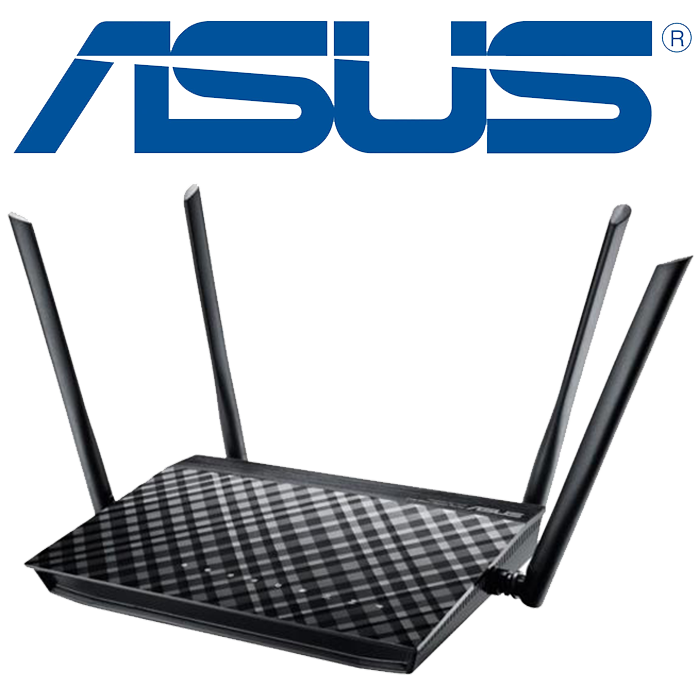
The router reviewed
ASUS RT-ACRH13 (AC1300)
The dual-band AC1300 in this review. For a current upgrade it points to its WiFi 7 successor, the ASUS RT-BE58U.
What the AC1300 brings
The AC1300 set itself apart on price, features, and speed. It packs the modern essentials: MU-MIMO on dual-band AC, so it switches supported devices between the 2.4GHz and 5GHz bands to keep the connection steady whatever you are doing, four 5dBi antennas to push signal through the house, and a USB 3.0 network port that shares an attached drive, like an external disk or a NAS, across the network as if it were plugged into your PC.
How much faster is it, really?
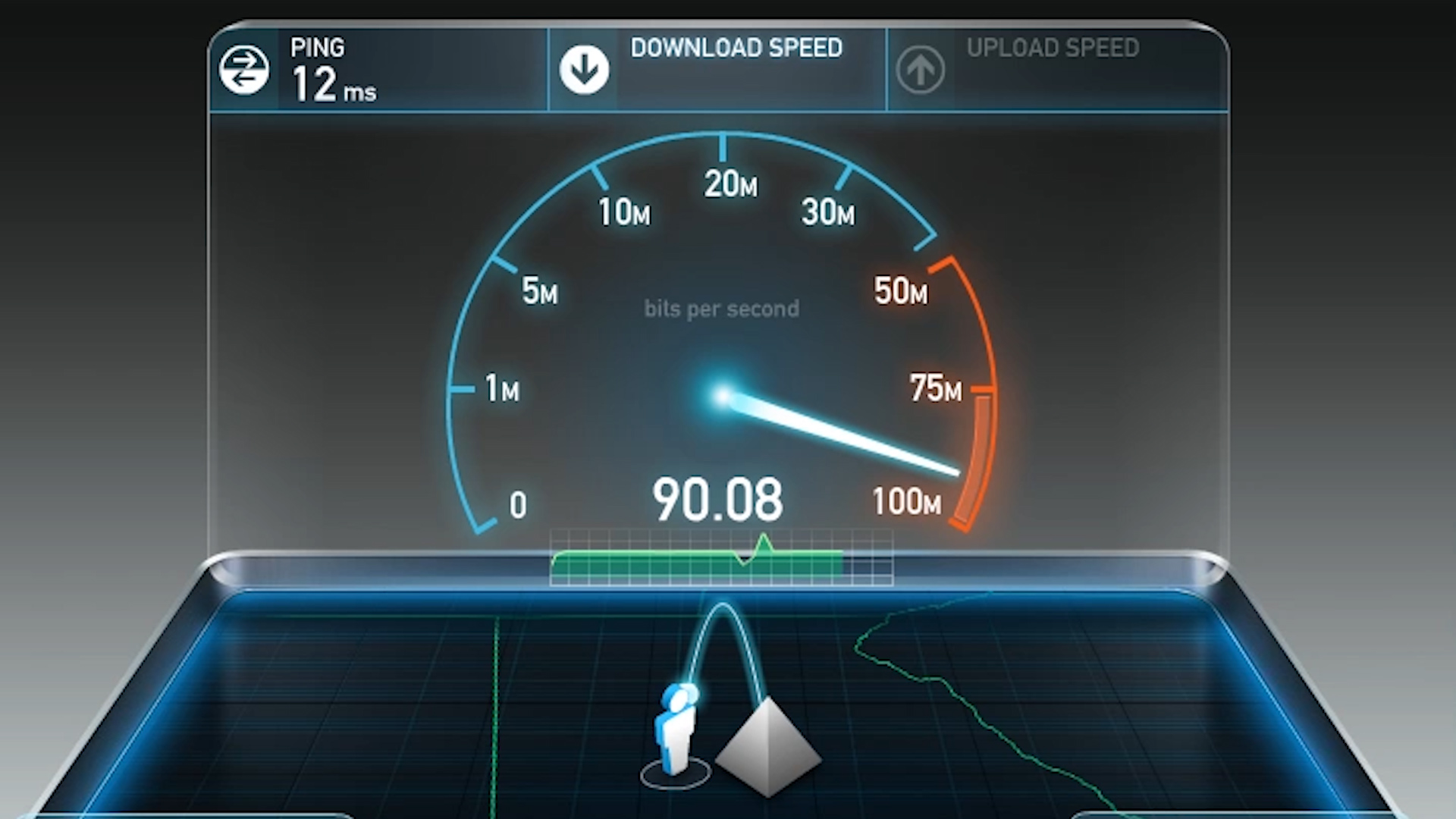
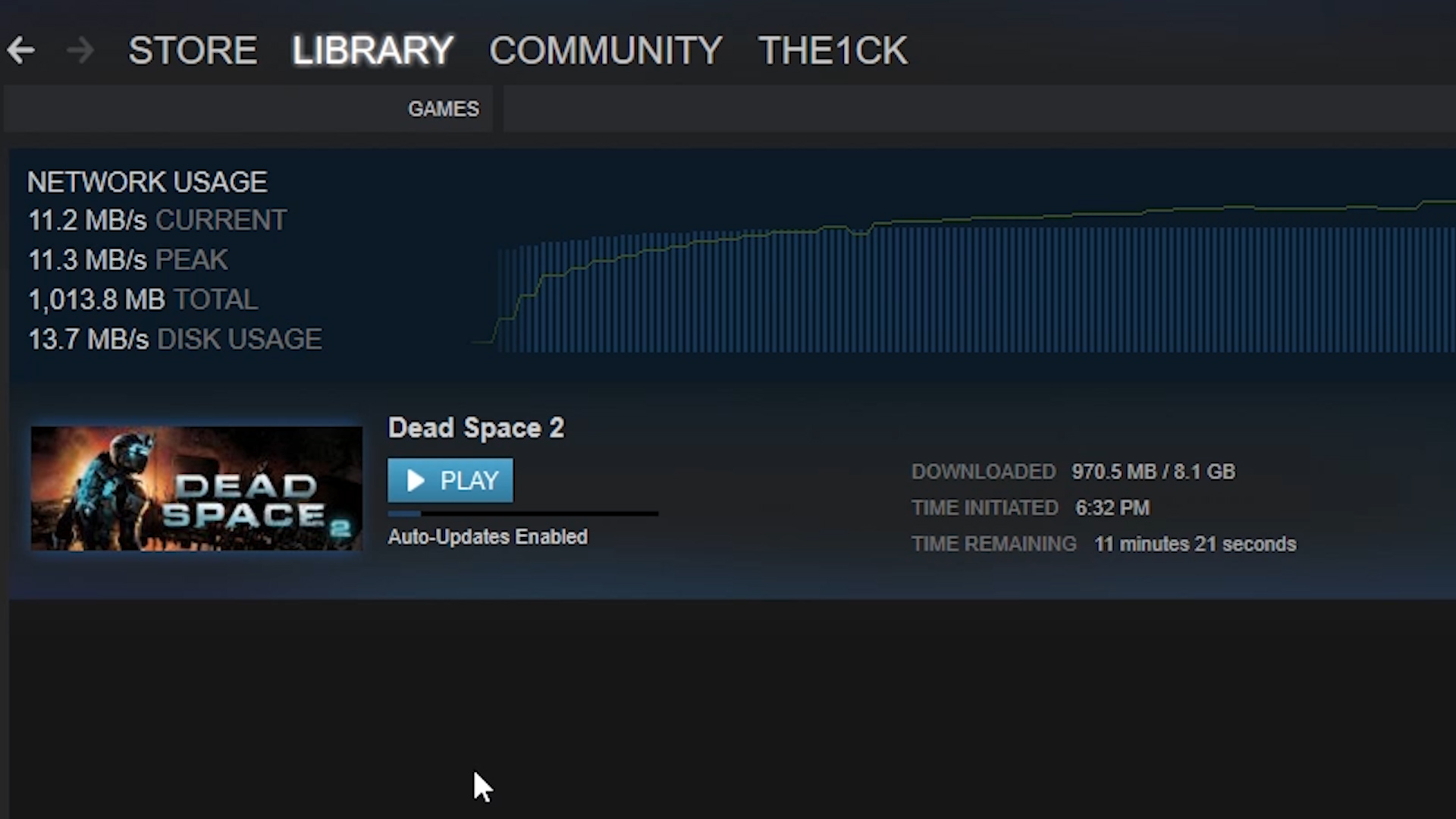
When I ran a speed test I nearly fell out of my chair. My old router maxed out around 40 megabits per second down, which I had assumed was my plan's cap. The AC1300 shot to 91, more than double, and I had not even known I was entitled to speeds that high. Downloading on Steam went from barely 5 megabytes per second to a steady 13, pulling an 8.5GB game in about ten minutes. Wired, the AC1300 proved its worth more than twofold, and honestly I was a little annoyed I had been leaving that bandwidth on the table for years.
Over WiFi the story repeated. On my HTC One M8 I had averaged about 20 megabits down in the next room from the old router; on the AC1300 I got the full wired-equivalent speed, around 90 megabits on the 5GHz band the phone supports. Your mileage depends on your ISP's cap and whether your devices support the higher frequencies and MU-MIMO.
How is the coverage across a house?
Signal strength dropped off fairly quickly from one side of my modest home to the other, but even the far readings beat the old router by at least twofold. On the ground floor where the router sits, coverage was strongest right beside it at -25dBm and stayed well in the green out to the den. I mapped this with a free app called WiFi Analyzer. Even out in the garage the signal was good enough for YouTube or Netflix.
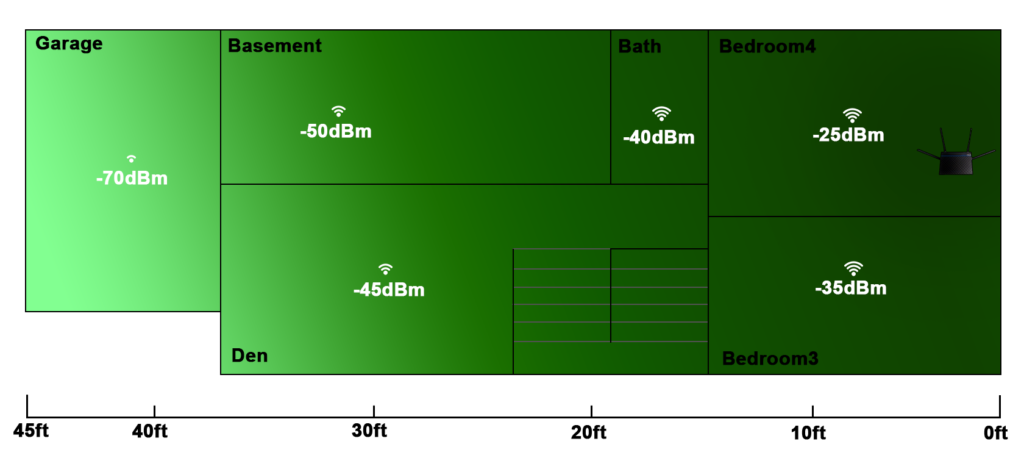
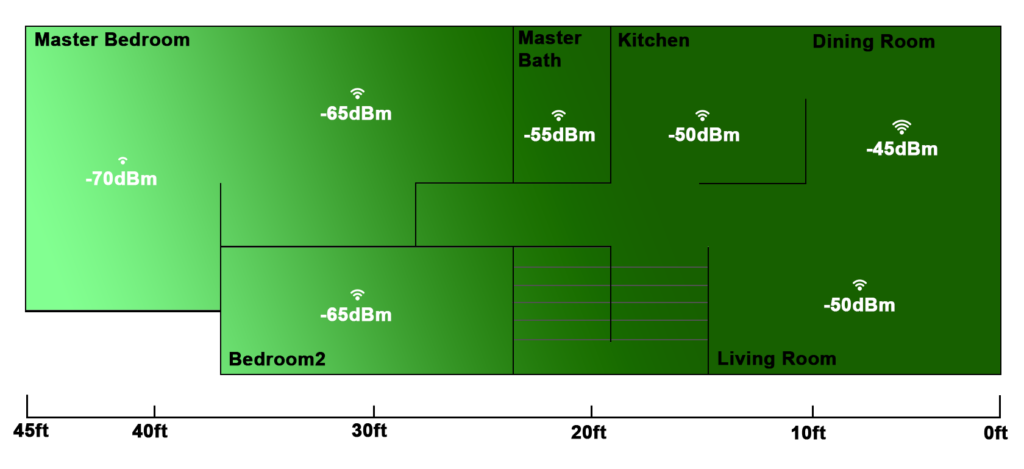
Upstairs I lost some strength, even directly above the router, but not enough to matter, and at the far end in the master bedroom I still pulled 50 megabits down on a quarter of the original signal. Centrally locate the router and you would likely never see a dead spot short of a mansion.
The interface and USB storage
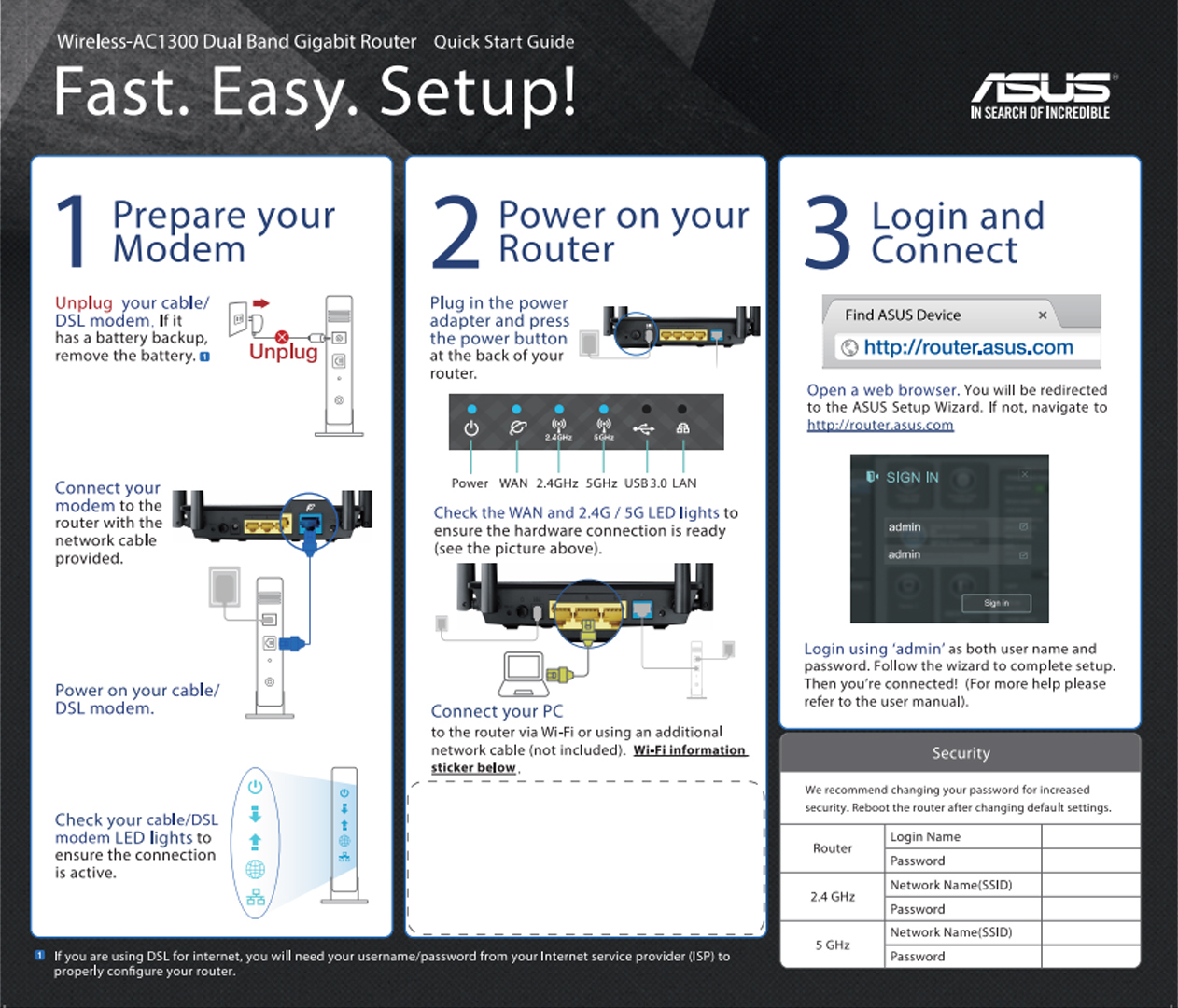
ASUS's network manager is an easy GUI with access to essentially every setting, great whether you are a tinkerer or a parent setting up controls, and for me it was ready to go out of the box. The feature I was most curious about was the USB 3.0 network port. I plugged in a thumb drive and it was detected instantly, appearing as another computer on the network with all its files available, no fiddling required. It is a great option for backing up from several machines to a shared drive or a future NAS. You may just need to adjust your PC's network sharing settings to see attached devices.
Keep in mind
- AC-era WiFi, not WiFi 6 or 7 by today's standards.
- Signal falls off across a larger, multi-floor home.
- MU-MIMO and 5GHz gains need supported devices.
What it nailed
- More than doubled wired and WiFi speeds in my home.
- Dead-simple setup and a friendly management GUI.
- USB 3.0 port shares a drive across the network.
- Still useful years later as a network extender.
Frequently Asked Questions
Is the ASUS AC1300 (RT-ACRH13) still worth it?
It is an older AC-era router now. It still works well, and I still use mine as a network extender, but for a new purchase the WiFi 7 ASUS RT-BE58U is the better buy.
Does the ASUS AC1300 have a USB port?
Yes, a USB 3.0 port that shares an attached drive across your network like a simple NAS, accessible from any computer in the house.
How much faster is the AC1300 than an old router?
In my home it more than doubled speeds: wired went from about 40 to 91 Mbps, and WiFi from about 20 to 90 Mbps on the 5GHz band. Your results depend on your ISP plan.
Does the AC1300 support MU-MIMO?
Yes, MU-MIMO on dual-band AC. To see the benefit your devices also need to support MU-MIMO and the 5GHz band.
Should you buy the ASUS AC1300?
Upgrading from an almost decade-old router was more than worth it, for the speed, the friendly interface, the network USB port, or all of the above. The AC1300 delivered on every front and then kept going for years.
If you are shopping today, jump straight to its WiFi 7 successor, the ASUS RT-BE58U, which is where the buy links point. A full review of that one is coming soon.