
Connect XReal Air glasses to a desktop PC
Most desktops have no USB-C video output, which makes plugging in XReal Air glasses tricky. The fix is one specific cable. Here is the step-by-step to get your XReal Air or Air 2 Pro running from a desktop.

Plays via YouTube. Google may set cookies when the player loads. Privacy policy
Editor's note (July 2026): This guide is from 2023 and still works for XReal Air and Air 2 Pro owners. Since then I have switched to the VITURE Luma Pro as my daily glasses. If you are on VITURE instead, I wrote a matching VITURE desktop connection guide. For my long-term take on living with the XReal Air, see the full review.
The short version
Desktops rarely have a USB-C port that outputs video, so you cannot just plug the glasses in. The answer is a DisplayPort-to-USB-C cable that also carries power over a USB-A leg. Plug the DisplayPort end into your graphics card, the USB-A end into a powered motherboard USB port, and the USB-C end into the glasses. Then set the display to 1920 by 1080 at 60fps and use Windows + Shift + arrow to move a window onto the glasses.
One DisplayPort-to-USB-C cable with power solves it.Why a desktop makes this tricky
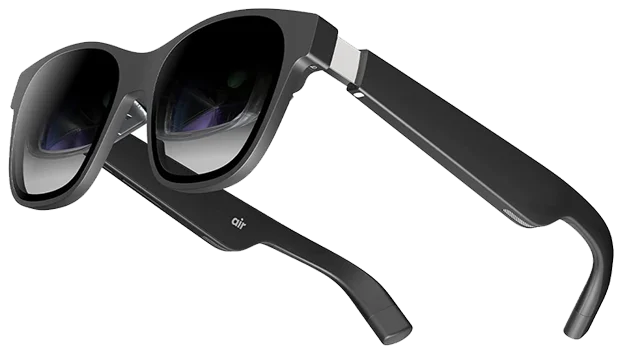
The XReal (formerly Nreal) Air glasses are a great way to get a big private display, but they expect a single USB-C connection that carries both video and power. Laptops and phones with USB-C video output handle that in one cable. Most traditional desktops do not have USB-C video output at all, so before anything else, check your machine's ports. If your desktop has no USB-C video out, and most do not, you need the workaround below.
The cable that makes it work
To connect the glasses to a desktop, you need a single special cable: a DisplayPort-to-USB-C cable that combines a video connection with a powered USB-A adapter. The DisplayPort side pulls video straight from your graphics card, while the USB-A side supplies power, which matters because the glasses have no onboard battery. The one I used is a WJESOG DisplayPort to USB-C cable, 6.6 feet, rated 4K at 60Hz.
Disclosure: This post contains affiliate links. As an Amazon Associate I earn from qualifying purchases, at no extra cost to you. Affiliate links like these and my YouTube channel are what keep the site running.
Making the connection, step by step
With the cable in hand, the wiring is quick:
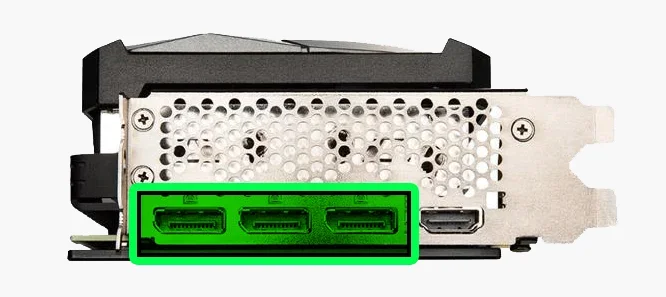
- Find the DisplayPort on your computer, usually on the back of the graphics card, and plug in the matching end of the cable. My example uses an NVIDIA RTX 3080, but most modern GPUs look similar.
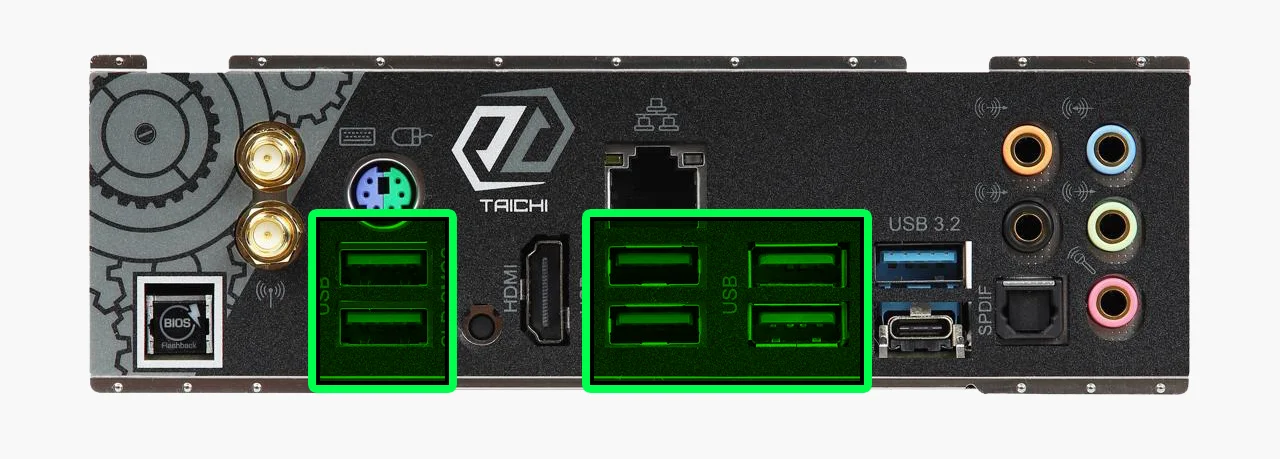
- Plug the USB-A end into a powered USB port. An open port on the back of the motherboard works best, and this is what gives the glasses their power.
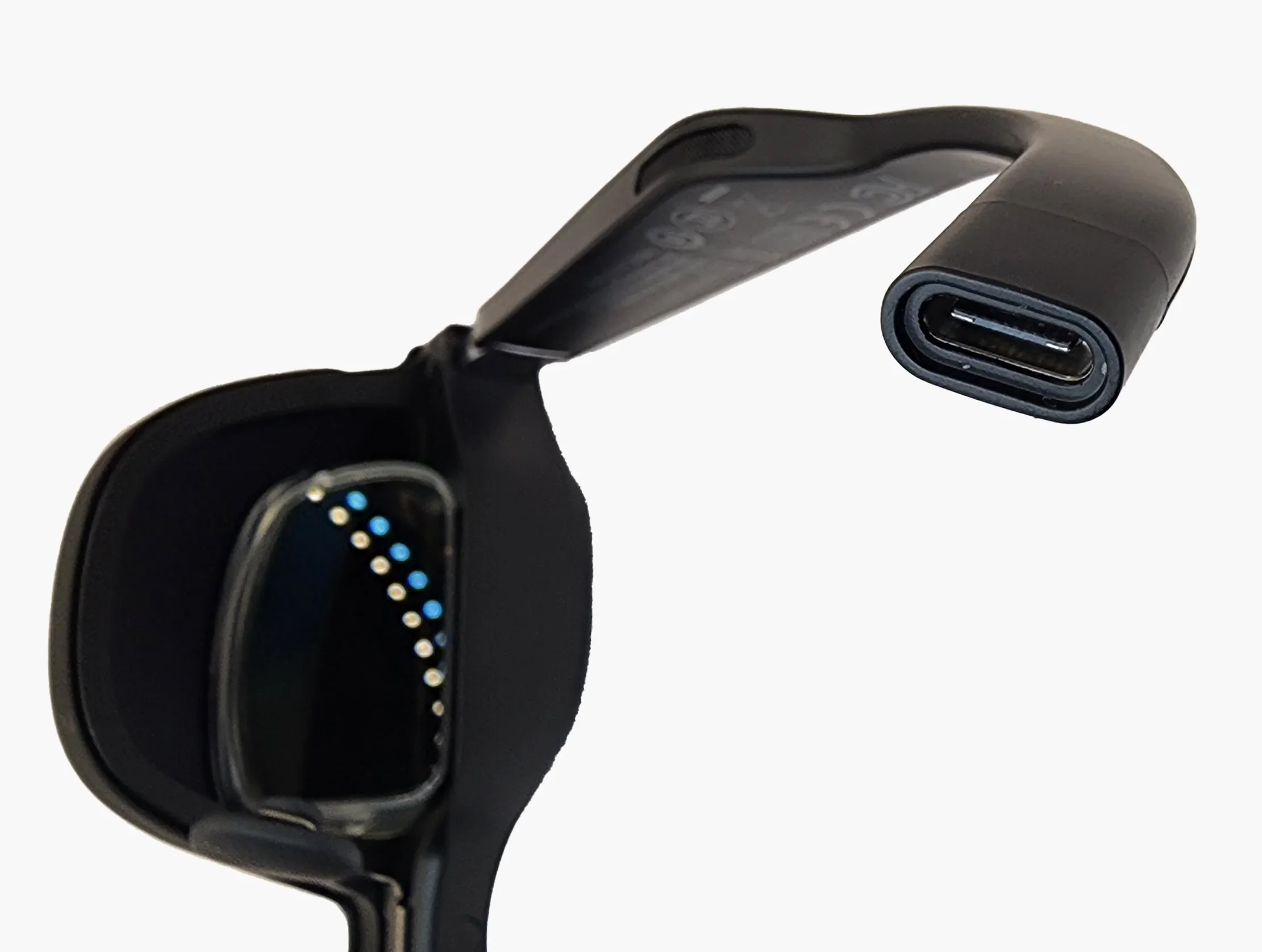
- Plug the USB-C end into the XReal Air glasses, and make sure it is seated securely.
Adjusting your display settings
Once everything is plugged in, you may need to tweak your display settings so the glasses behave. This varies by operating system, but you usually reach it through the Control Panel on Windows or System Preferences on a Mac. A couple of things to check:
- Confirm the glasses' display is set to 1920 by 1080 at 60fps, their native resolution and refresh rate.
- To send a window to the glasses, use the shortcut Windows + Shift + Left or Right arrow to move the active application to the other screen.
That is it. With the right cable, connecting the XReal Air or Air 2 Pro to a desktop without USB-C video output is entirely doable, and it opens up a big private screen for your PC.
Frequently Asked Questions
Can you connect XReal Air glasses to a desktop PC?
Yes. Most desktops lack a USB-C port that outputs video, so you use a DisplayPort-to-USB-C cable that also carries power over a USB-A leg. The DisplayPort end pulls video from your graphics card and the USB-A end powers the glasses, which lets a desktop drive the XReal Air or Air 2 Pro.
Why won't my XReal Air work with my desktop's USB-C port?
Because most desktop USB-C ports do not carry a video signal. The glasses need video, and on a desktop that has to come from the graphics card's DisplayPort. That is why the workaround routes video from DisplayPort and power from a USB-A port through one combined cable.
What cable do I need for XReal Air on a desktop?
A DisplayPort-to-USB-C cable with a powered USB-A adapter. The DisplayPort side handles video from your GPU and the USB-A side supplies power, which the glasses require because they have no onboard battery. I used a WJESOG DisplayPort to USB-C cable rated 4K at 60Hz.
What resolution do XReal Air glasses run at?
1920 by 1080 at 60fps, which is their native resolution and refresh rate. After connecting, confirm your display settings match that so the image looks correct and smooth on the glasses.
How do I move a window onto the XReal Air display?
On Windows, press Windows + Shift + the Left or Right arrow key to move the active application to the other screen, which sends it onto the glasses. You manage the glasses as a second monitor from your normal display settings.
A big private screen from your desktop
Connecting AR glasses to a desktop without USB-C video output looks intimidating at first, but with the right cable it is straightforward. Follow these steps and your XReal Air or Air 2 Pro becomes a large private display for your PC. If you are shopping glasses new, I have since moved to the VITURE Luma Pro, so check the why I switched writeup and its own desktop guide before deciding.