
CoPedvic Phone Lens Kit Review
Can a cheap clip-on lens kit stand in for a DSLR? I tested the telephoto, macro, fisheye, and wide lenses. Nice case, a useful macro lens, and not much else.
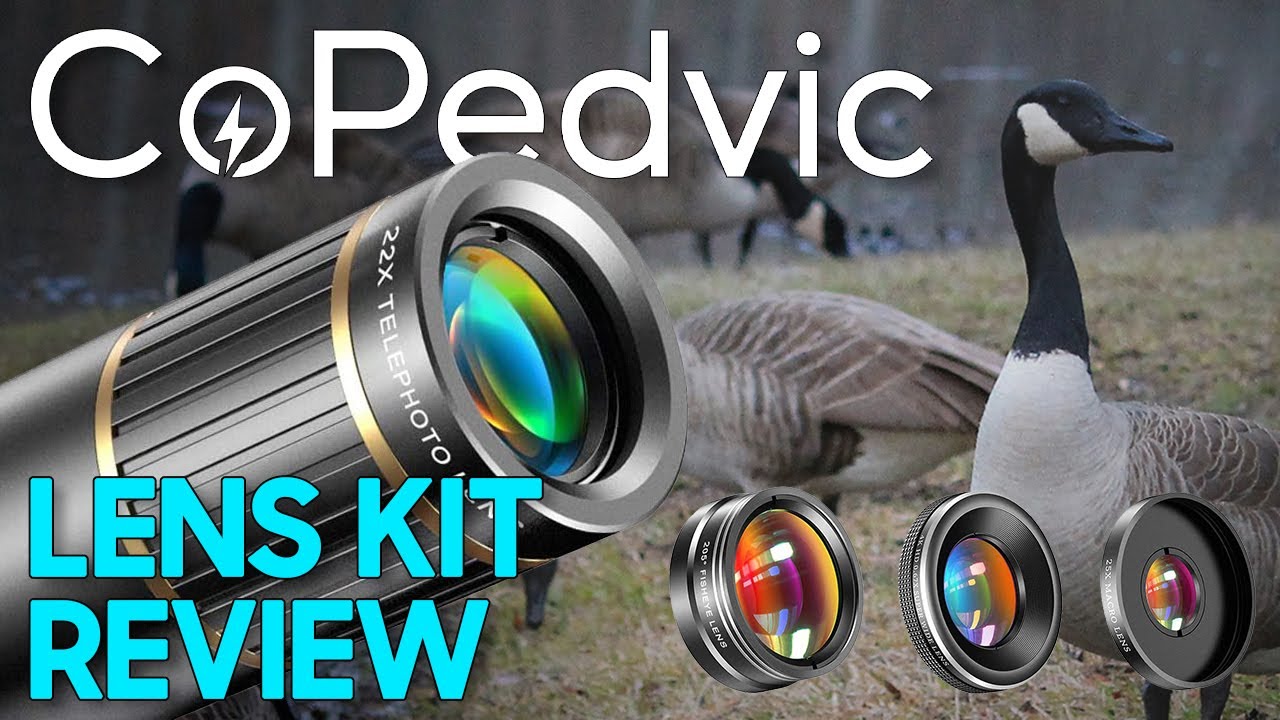
Plays via YouTube. Google may set cookies when the player loads. Privacy policy
The short version
I hoped this kit would cover the mid-range shots where phone digital zoom falls apart and hauling a DSLR is overkill. It mostly did not. The carrying case is lovely and the macro lens is genuinely fun, but the 22X telephoto I actually bought it for has a stubborn dark halo and only ever gets the center of the frame sharp. For me it is not a DSLR replacement. My rating: 2/5.
Verdict: the case and macro lens, and little elseUpdate: I eventually gave up trying to find a good phone lens kit and invested in a real camera instead, the Canon EOS R7, and I never looked back. This review stands as my honest experience with the clip-on route.
Why I tried a phone lens kit
As much as smartphone cameras have come along in a few short years, I still find myself hauling out my almost ten-year-old Canon Rebel T3 DSLR with a 250mm telephoto, especially at the race track or on a hike where I want those long-distance shots. Digital zoom on a phone can make up some of the distance, but the results usually come up short.
In my opinion you still cannot beat the optics of a full-size lens and camera for long range, but carrying a bulky camera everywhere is cumbersome given how much a modern phone can already do. So I wanted to see whether a clip-on kit could fill the mid-range gap, the shots where digital zoom will not cut it but bringing the DSLR is impractical.
Why I chose the CoPedvic kit
As telephoto lenses for phones have multiplied and dropped in price, I got curious how well one would actually hold up in the real world. I did not expect it to replace my DSLR outright, just to handle those mid-range scenarios. Around Christmas I went looking for a kit that offered a few lens types, was compact relative to my DSLR, sat in a sensible budget, and had a decent number of reviews.
The CoPedvic kit caught my eye because it ticked every box, and with over thirty-five hundred reviews it felt like a safe bet. It seemed like a low-risk way to start playing with these lenses and maybe graduate to something more serious later. As you will see, though, those reviews turned out to be a bit disingenuous.
Setting up and handling the lenses
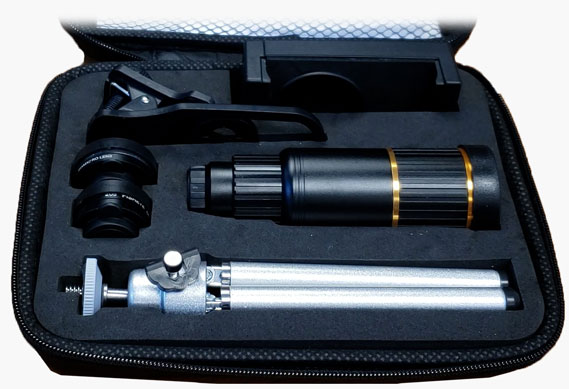
A few things I learned quickly. Attach the clip to your phone without a lens first, so you can line up the mount before a lens is in the way. That matters most with the telephoto, where once it is screwed in you can only judge alignment from the screen. And unless you have the steady hands of the person who pinstripes Bentleys, you will want a tripod, especially at full zoom, because even the slightest movement translates into huge shifts in the frame.
Be careful zooming the telephoto back in: go too far and you start unscrewing the lens from the mount. Some kind of locking mechanism would have gone a long way.
How do the CoPedvic lenses actually perform?
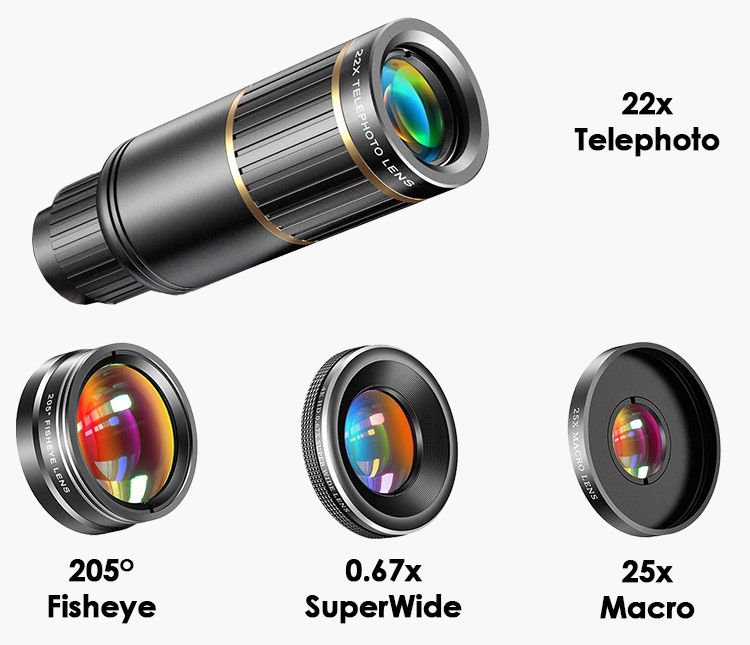
Here is what you can expect from each lens, and your results may vary. Starting with the 205 degree fisheye: you do get the fisheye effect, which is fun, but even before the distortion the outer edges are blurry and out of focus. That soft-edge problem becomes a recurring theme. The 0.67X super wide, which has to be paired with the macro lens, does fit more of the scene in frame, but again the edges go blurry, which made those shots unusable for me.


The 25X macro lens is the bright spot. It gets you far closer than the phone can on its own, and although the edges still distort, I found the results genuinely interesting. This is the one lens I expect to keep reaching for.

Then the reason I bought the kit at all, the 22X telephoto. It works in the sense that you can zoom in and mostly make out your target, but the results are not great. Unlike the other lenses, there was a persistent darkened halo that would not go away no matter how carefully I aligned it, at every zoom level. Only the center of the picture is ever clear, and trying to use it on a moving target is nearly impossible. The comparisons against my old DSLR tell the story.





For what a real camera and telephoto lens do to these same kinds of scenes, see the smartphone versus mirrorless zoom showdown.
Are the CoPedvic Amazon reviews real?
About those thirty-five hundred reviews, the vast majority four stars or higher. After my kit arrived I found out how they got there. In the box was a card: you are special, here is a free gift. Go to a website, choose among a few options including a twenty dollar Amazon gift card, and just provide your email, address, and purchase information. Nice, I thought, until a few hours after submitting my details I got an email saying I would receive my free gift once I showed proof of a written review.
It did not explicitly say the review had to be five stars, or even positive, but I think most people would feel that is implied, at the risk of losing the gift. So that is how a mediocre kit racks up thousands of glowing reviews. I wish Amazon would do more about these pay-to-play schemes, and it is worth keeping in mind any time a cheap gadget has a suspiciously stellar rating.
The problems that sank it
- The 22X telephoto has a persistent dark halo at every zoom level.
- Only the center of the frame is ever sharp; edges stay soft.
- Fisheye and super-wide shots were unusable for me.
- The telephoto unscrews itself if you zoom back too far.
- The glowing Amazon reviews are incentivized with a gift.
The good bits worth noting
- The carrying case and foam insert are genuinely nice.
- The 25X macro lens is fun and the one I would keep using.
- A cheap way to experiment before spending real money.
Frequently Asked Questions
Is the CoPedvic phone lens kit worth it?
In my experience, no. The carrying case and the 25X macro lens are the only real positives. The 22X telephoto I bought it for has a stubborn dark halo and soft edges, so it is not a DSLR replacement.
Can a phone telephoto lens replace a DSLR?
Not in my testing. Even zoomed in, only the center of the frame stays sharp, and the results fall well short of even an older entry-level DSLR with a real telephoto.
Why does the CoPedvic telephoto have a dark halo?
A persistent darkened halo appeared at every zoom level no matter how carefully I aligned the lens, and only the center of the frame stayed clear. Nothing I tried removed it.
Are the CoPedvic Amazon reviews real?
Many appear incentivized. The box included an offer for a free gift, such as a twenty dollar gift card, in exchange for showing proof of a written review, which inflates the star rating.
Which CoPedvic lens is actually useful?
The 25X macro lens. It is the one I would still reach for, in a controlled setting where you can get close and steady.
Should you buy the CoPedvic lens kit?
Overall I was disappointed, though I am not entirely sure what I was expecting. I doubt I will bother taking off my case and screwing on the telephoto again unless I am shooting a stationary target in a spot I will be at for a while, and even then it is iffy. The macro lens I can see using now and then in a controlled setting. The rest I was never that interested in, so, meh. I may even retrofit that nice carrying case and foam insert for something else.
This is all my opinion and quality can be subjective, so you might have better luck than I did. But I have a feeling it is what it is, and this kit is not worth it in my book. As phone sensors get bigger and multi-camera setups reach even budget phones, I suspect these clip-on lenses will only get more awkward. In the meantime I will keep hauling my DSLR to the track. If you know of a genuinely better kit, tell me, I might check it out.
Disclosure: I bought this lens kit myself. This post contains affiliate links, and as an Amazon Associate I earn from qualifying purchases, at no extra cost to you. Affiliate links like these and my YouTube channel are what keep the site running.