
Duel of the Lenses: Smartphone vs Mirrorless Zoom Showdown
Can a smartphone really reach an object nearly a mile away? We put the Samsung S24 Ultra's 100x Space Zoom head to head with the Canon R7 and Tamron 18-400mm to see which one actually delivers.
Prefer to see the zoom test in motion?
I put gear like this through its paces on the channel. Subscribe to catch new comparisons, tutorials, and product reviews the moment they go live.
The short version
For sheer reach, the Canon R7 with the Tamron 18-400mm is the clear winner. It out-resolved the phone at every long-range stage and was the only setup that cleanly captured our subject 0.7 miles away. The Samsung S24 Ultra is the smarter everyday pick: lighter, always in your pocket, and versatile enough for everything from ultra-wide landscapes to a usable 100x grab when you have no other option.
Reach goes to the R7, everyday goes to the S24Smartphone zoom vs a real telephoto: which wins?
We are living in an amazing time for photography. Smartphones now shoot images that would have been unthinkable a decade ago, and dedicated cameras keep pushing image quality further. But when the question is pure zoom reach, who comes out on top? To find out, we lined up the advanced zoom of the Samsung S24 Ultra against the powerhouse combo of the Canon R7 and the Tamron 18-400mm lens.
Meet the two zoom setups
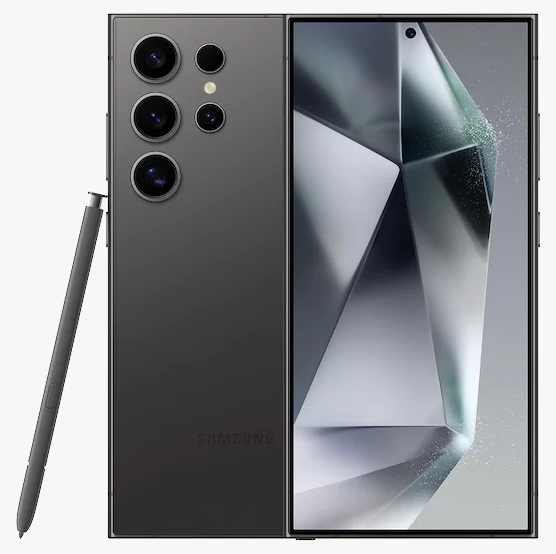
The Samsung S24 Ultra leans on a quad-camera system. Its telephoto lenses deliver up to 10x optical zoom, then stretch to a jaw-dropping 100x with Samsung's enhanced digital Space Zoom. At an MSRP of $1,399, it is a do-everything camera that also happens to be a phone.
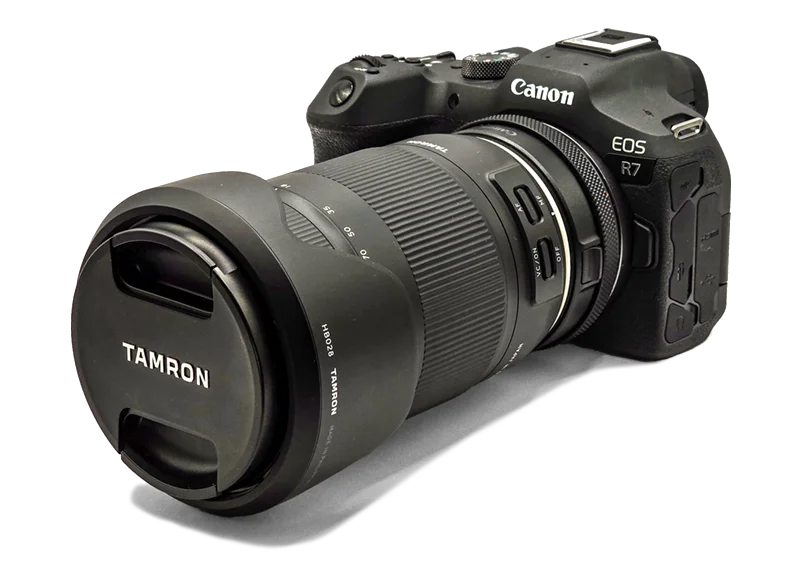
The Canon R7 is an APS-C mirrorless body known for its speed and image quality, but it truly comes alive with the Tamron 18-400mm bolted on: a hugely flexible lens with a breathtaking 22.2x optical range. Bought together, the pair runs a total MSRP of about $1,999.
How we tested zoom reach
To really appreciate what these systems can do, we put them through a distance test. The goal: capture an object a staggering 0.7 miles (1.1 km) away, then push even further to a city skyline 14 miles out. Could the Samsung S24 Ultra, digital Space Zoom and all, hang with the raw optical power of the Canon R7 and Tamron setup?
Across both scenes we step through three kinds of shot: a wide-angle frame to set the scene, a mid-range zoom to pull the subject closer, and an extreme zoom to see how much distant detail each system can actually resolve.
The specs that decide a zoom battle
A few numbers explain most of what you are about to see.
Focal length is the headline figure. The Samsung S24 Ultra's telephoto reaches roughly 230mm equivalent at full optical zoom. The Tamron, even on the APS-C R7 body, climbs to an astounding 640mm equivalent.
Sensor size is where the camera pulls ahead. The R7's much larger sensor gathers more light, holds up better in dim conditions, and renders more background blur, or bokeh, than a phone can.
Aperture matters too. The Tamron opens to f/3.5-6.3, bright at the wide end but narrowing as you zoom in, which is the trade you make for that enormous range.
One point in the phone's favor: the S24 Ultra also has a 0.6x ultra-wide lens for sweeping landscapes, architecture, and big group shots. The R7 and Tamron combo cannot match that without swapping to a dedicated wide-angle lens. Clip-on lenses promise to close gaps like this from the phone side; here is how that went in the CoPedvic smartphone lens kit review.
Disclosure: This post contains affiliate links. As an Amazon Associate I earn from qualifying purchases, at no extra cost to you.
The reach champion
Tamron 18-400mm f/3.5-6.3 Di II VC HLD
The all-in-one superzoom doing the heavy lifting for the Canon R7 in this test.
Results: the Stone Mountain skylift, 0.7 miles away
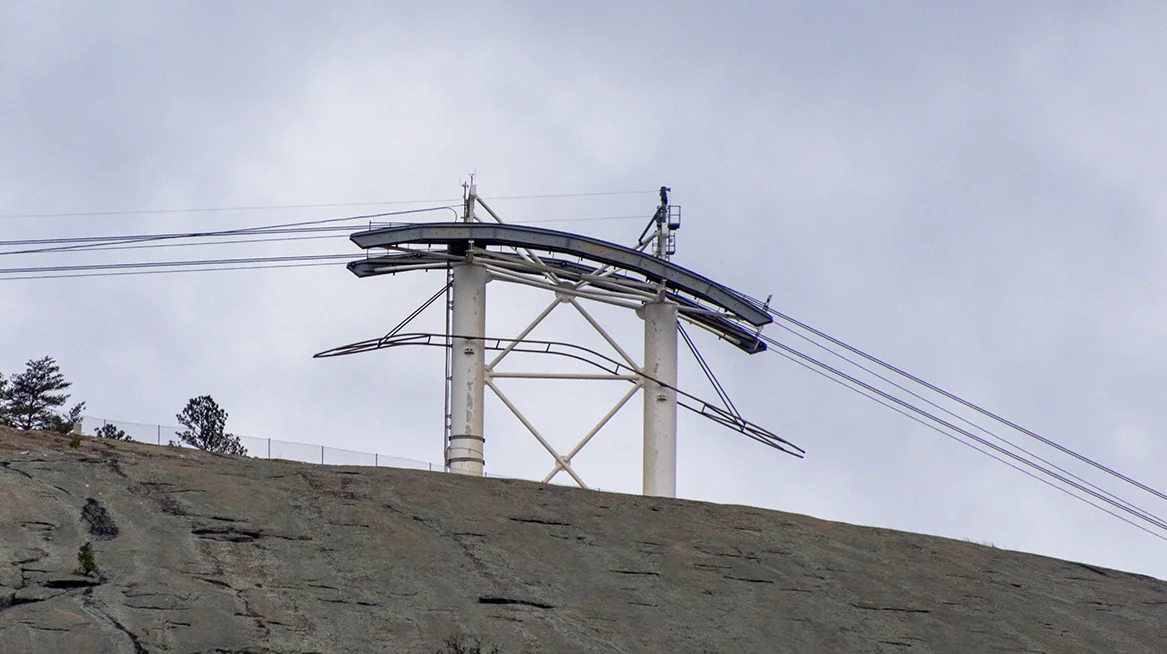
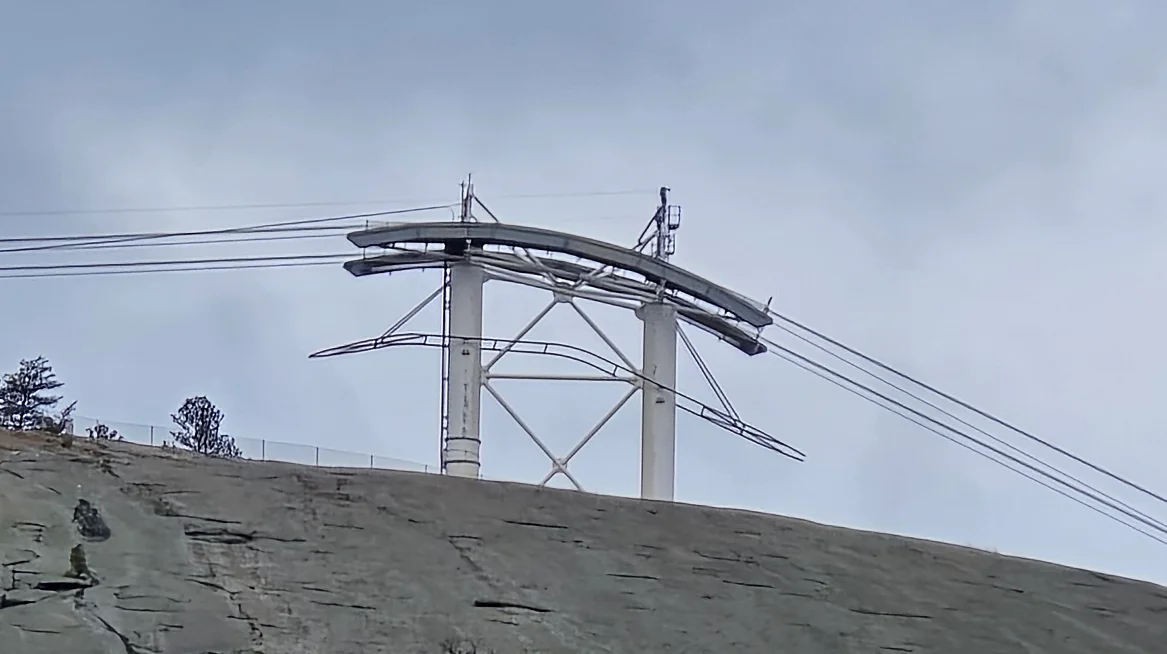
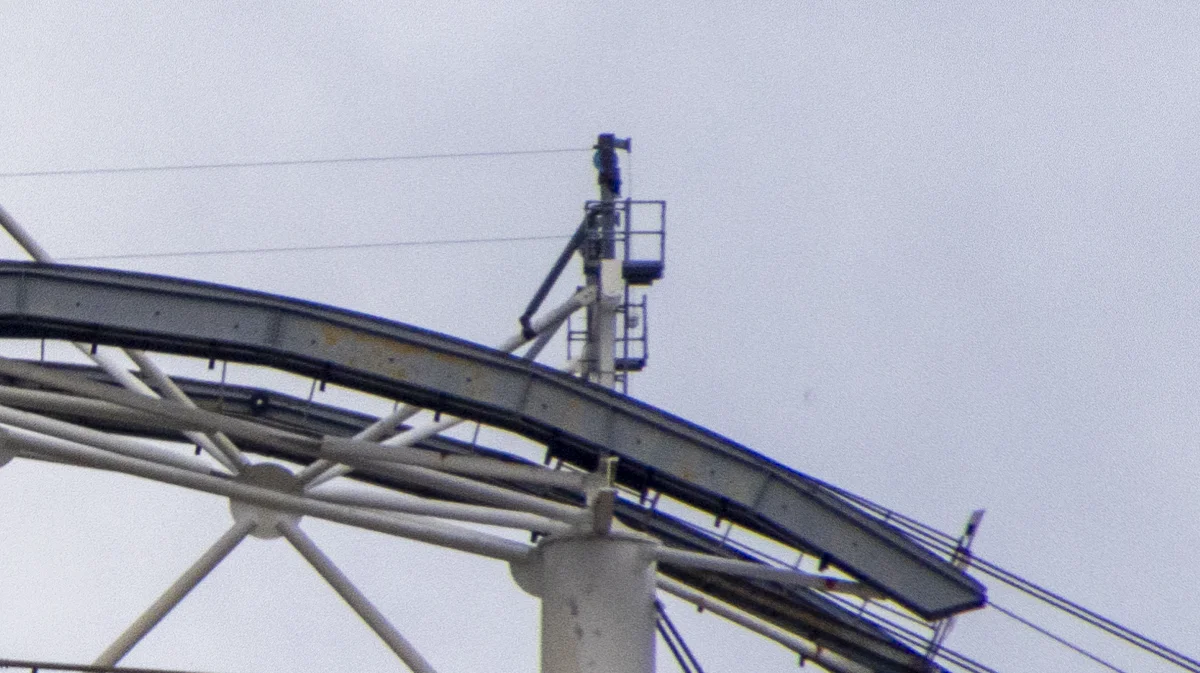
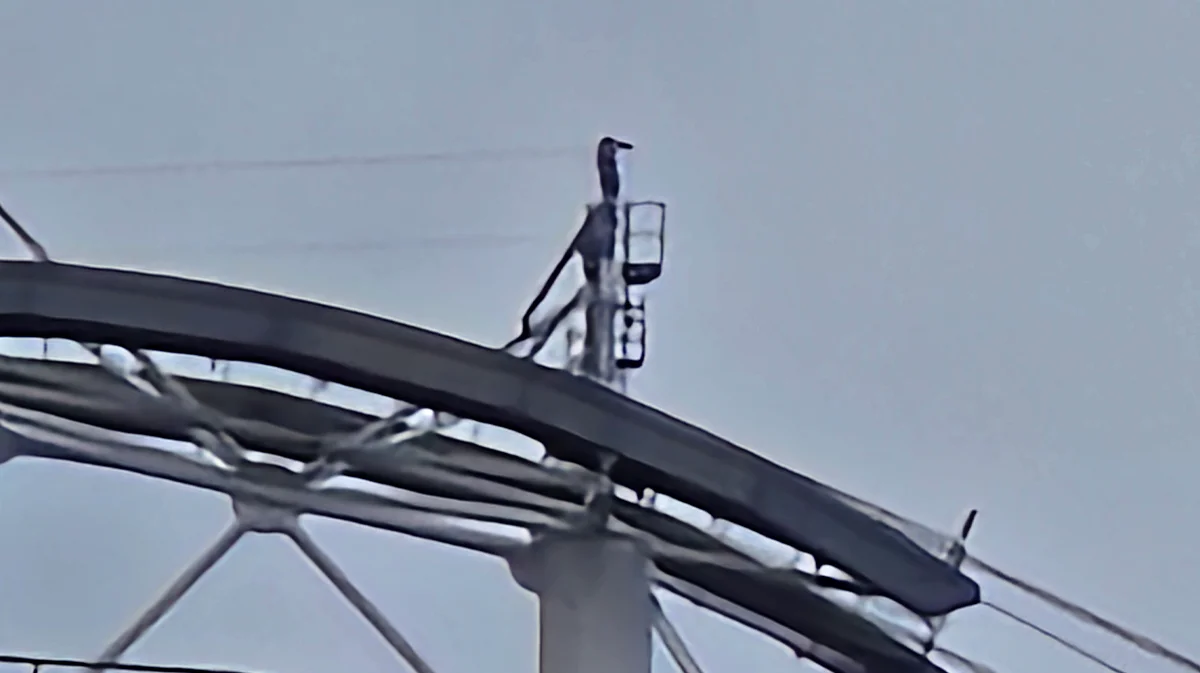
Our first target sits on top of Stone Mountain, just outside Atlanta, Georgia: the skylift pylon, roughly 3,700 feet, about 0.7 miles or 1.1 km from where we stood. We start wide, where the Tamron is at its 18mm widest but the S24 still has its 0.6x ultra-wide in reserve, then zoom both systems in stage by stage. Drag the handle on each slider to wipe between the Samsung S24 Ultra on the left and the Canon R7 and Tamron on the right at the matching step.






Results: the Atlanta skyline, 14 miles away
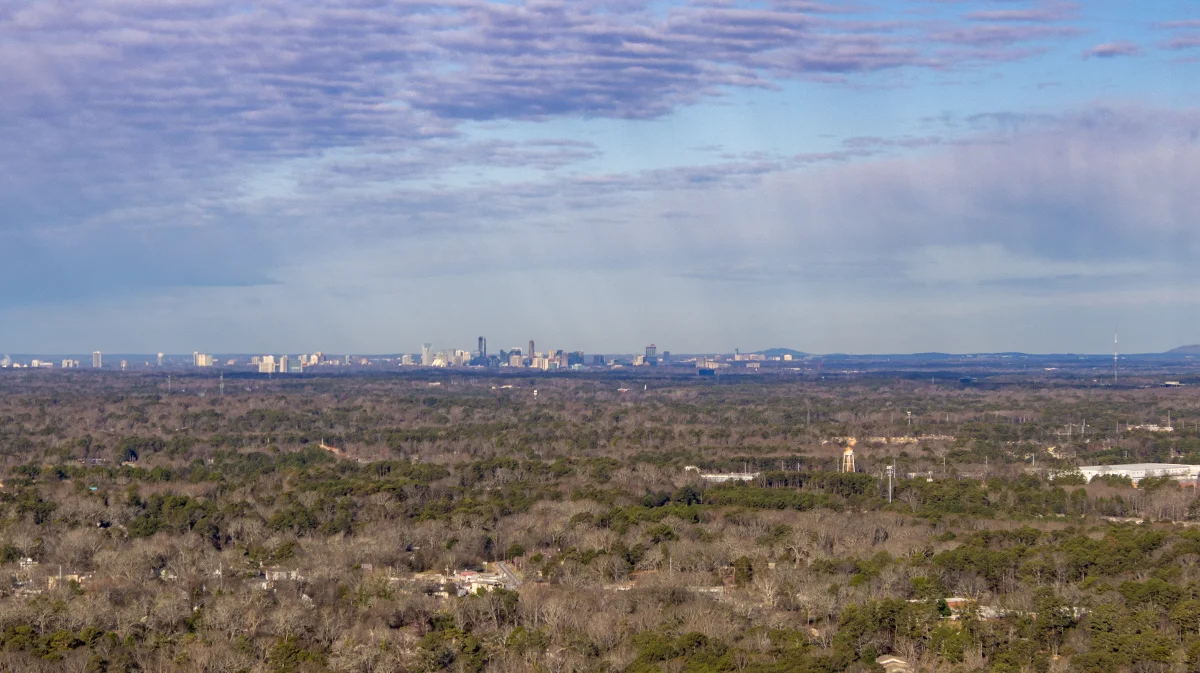
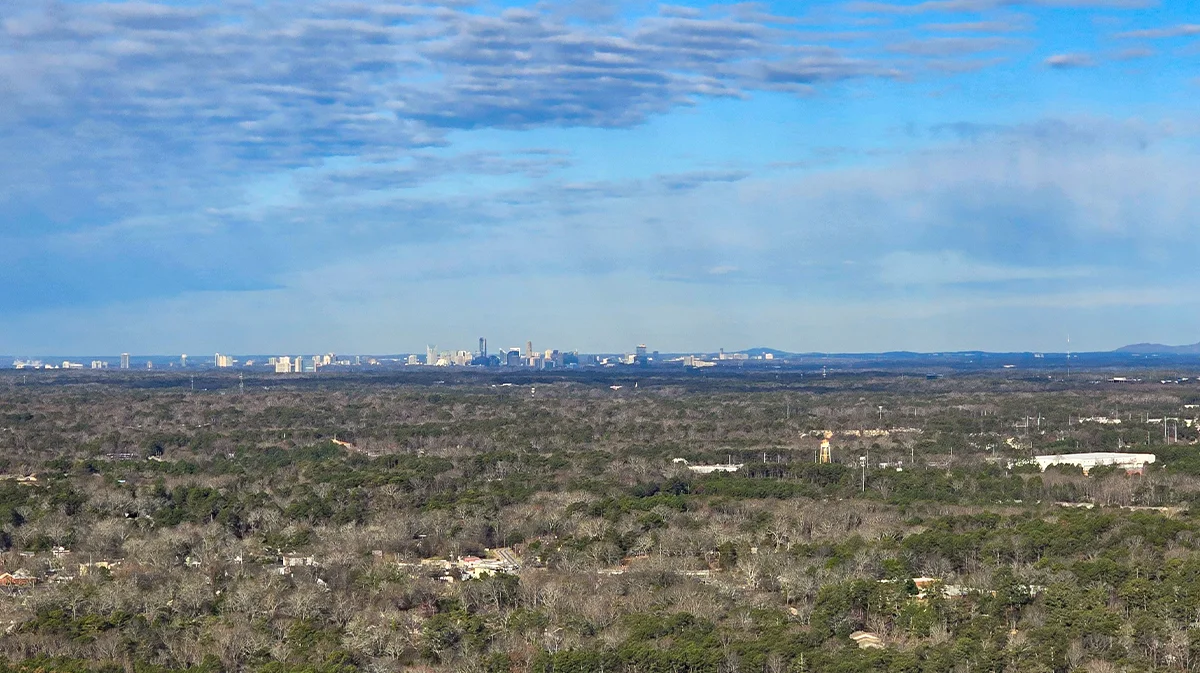
For the second scene we turned around at the top of Stone Mountain and pointed both systems back toward downtown Atlanta on the horizon, roughly 14 miles or 22.5 km away. This is a brutal test: haze, heat shimmer, and distance all work against you. Same routine, wide to extreme. Drag each slider to wipe between the S24 Ultra on the left and the R7 and Tamron on the right at every stage.
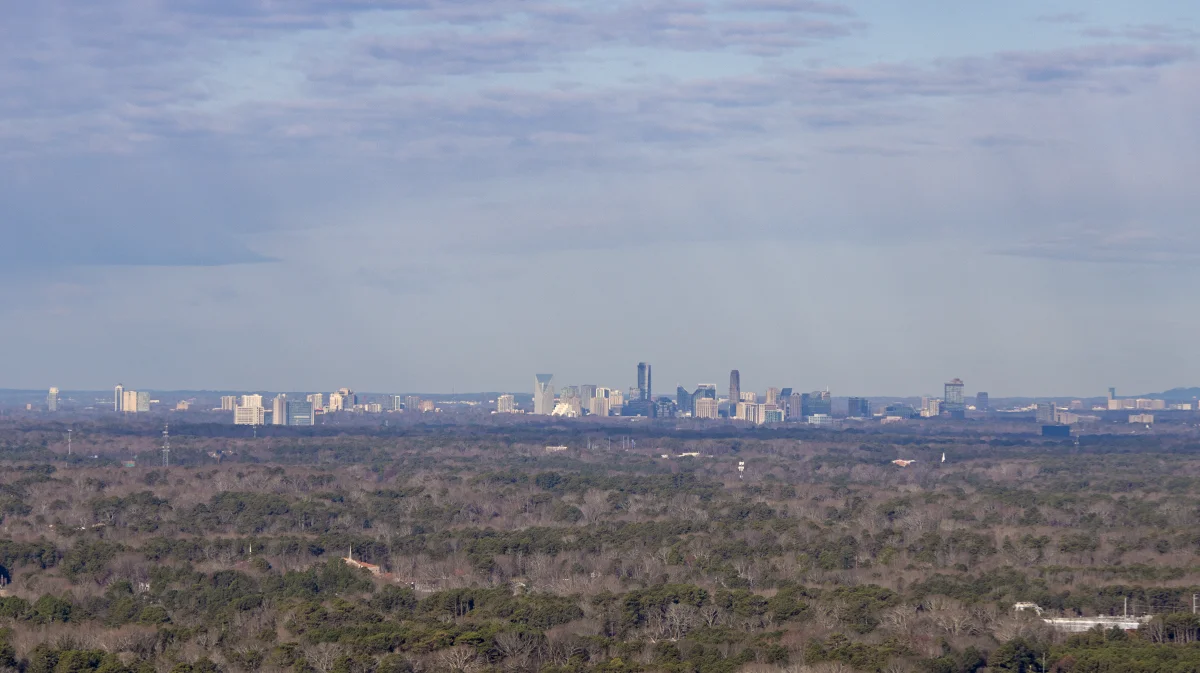
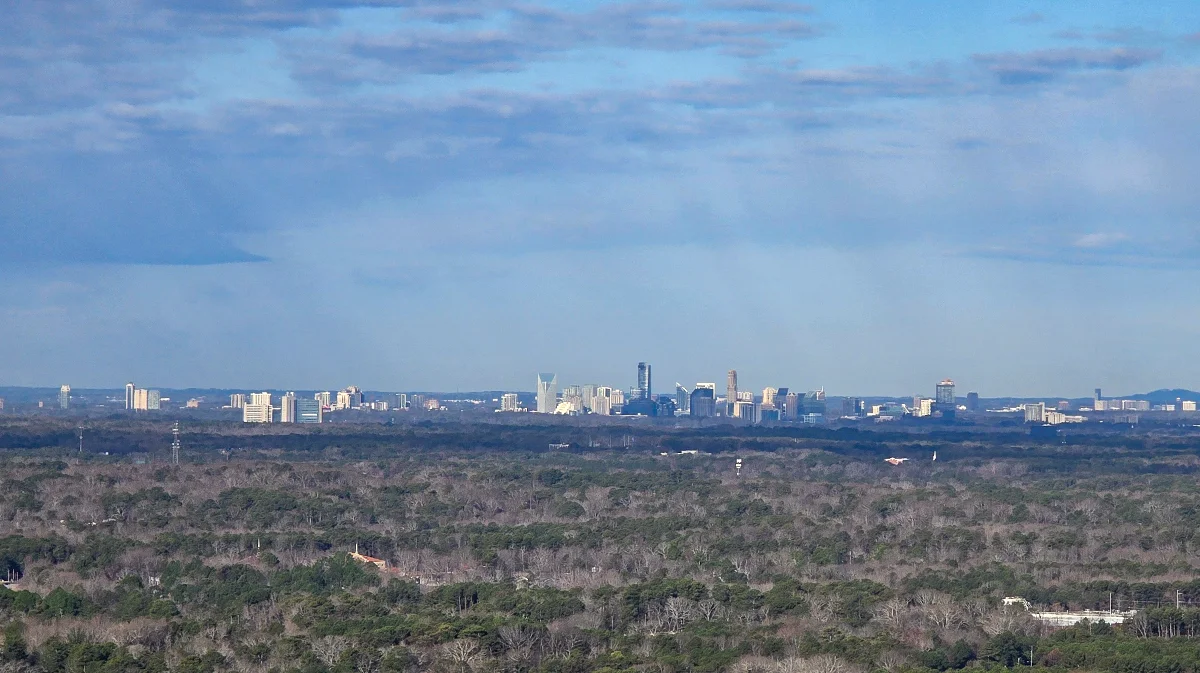
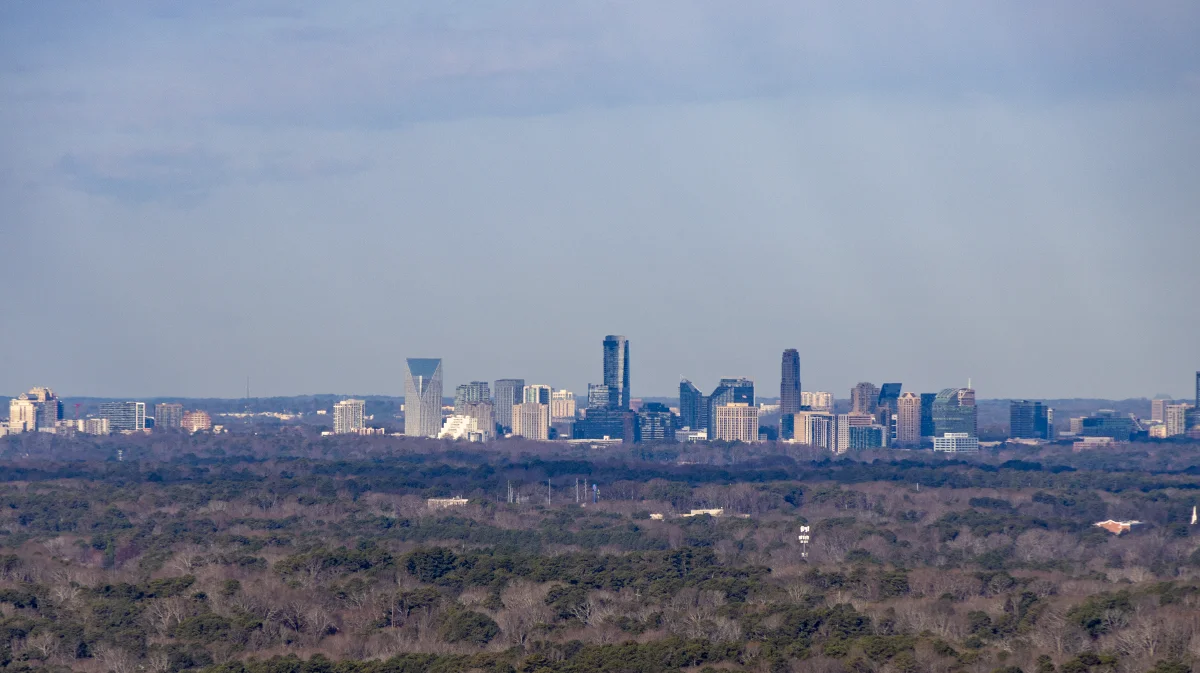
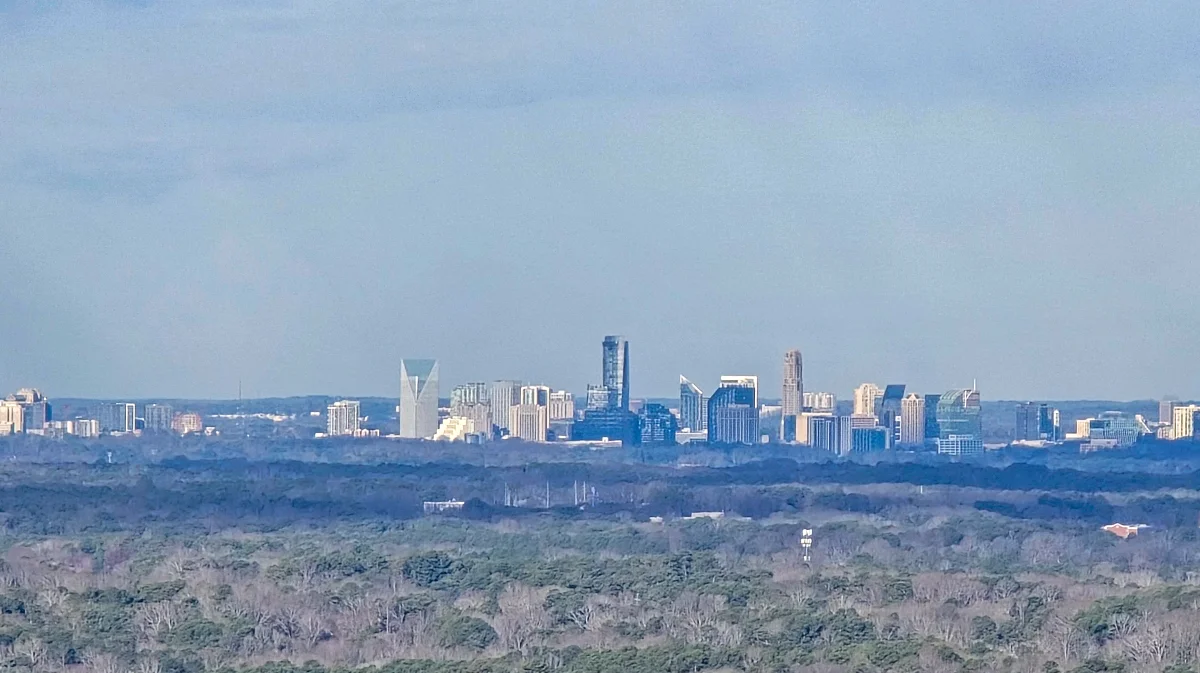




The best zoom solution depends entirely on your needs.
So which zoom setup should you buy?
Both setups impressed, but they win different races. The Canon R7 and Tamron 18-400mm delivered unsurpassed reach and were the clear winner in the extreme distance test, pulling in the subject 0.7 miles away with detail the phone simply could not match, plus better control over depth of field. The Samsung S24 Ultra counters with sheer convenience and versatility: it is a phenomenal all-rounder even when you are not zooming, and its Space Zoom offers extreme reach in a pinch, as long as you accept the drop in image quality. For the phone side on its own, see the full Samsung S21 Ultra zoom breakdown that started this whole experiment.
Everyday & travel Samsung S24 Ultra
- Always in your pocket, no bag required
- Ultra-wide 0.6x through to 100x in one device
- Best when getting the shot beats ultimate quality
Maximum reach Canon R7 + Tamron
- Unmatched optical clarity at long distance
- Ideal for wildlife, sports, and far-off subjects
- Larger sensor for better low light and bokeh
Frequently Asked Questions
Can a smartphone really zoom as far as a mirrorless camera?
Not with the same quality. The Samsung S24 Ultra can reach 100x with digital Space Zoom, but at our 0.7 mile test the Canon R7 with the Tamron 18-400mm resolved far more real detail. Phones stretch further on paper, yet a true telephoto lens wins on clarity.
What is the Samsung S24 Ultra's maximum zoom?
Up to 10x optical from its telephoto cameras, then up to 100x using Samsung's enhanced digital Space Zoom. The further you push past optical, the softer the image becomes.
How far does the Canon R7 with the Tamron 18-400mm reach?
The Tamron's 18-400mm range works out to roughly 640mm equivalent on the APS-C R7 sensor, a 22.2x optical zoom, which is what let it out-reach the phone in this test.
Is the Samsung S24 Ultra or the Canon R7 better for photography?
For everyday and travel photography the S24 Ultra is hard to beat on convenience and versatility. For maximum reach and image quality at a distance, the R7 and Tamron combo is the stronger tool. Many enthusiasts end up carrying both.
What is Space Zoom on the Samsung S24 Ultra?
Space Zoom is Samsung's name for combining optical zoom with heavy digital cropping and processing to reach up to 100x. It is handy for grabbing a distant subject when you have nothing else, but detail and sharpness fall off well before the maximum.